
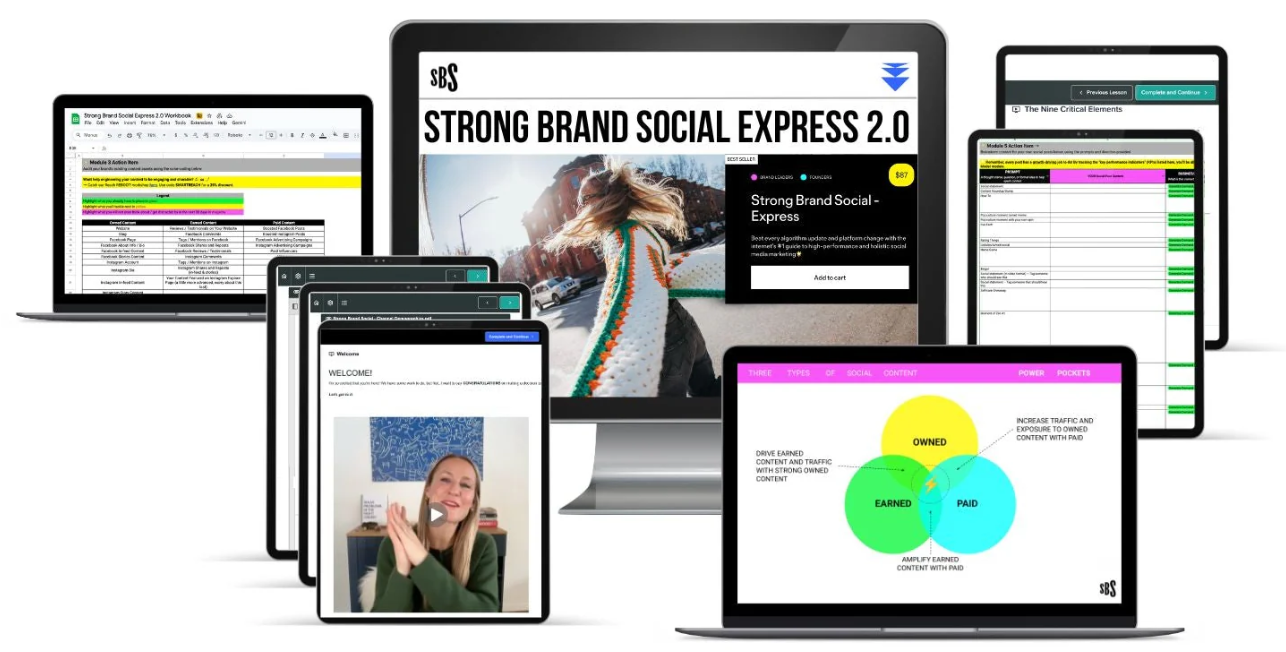
Description
Katie Wight – Social Media Analytics & Reporting: Complete Guide to Data-Driven Social Media Success
In today’s digital marketing landscape, social media success is no longer determined by likes and followers alone. Businesses, marketers, agencies, and content creators need reliable data to understand audience behavior, measure campaign effectiveness, and maximize return on investment. This is where Katie Wight – Social Media Analytics & Reporting provides valuable insights into transforming raw social media data into actionable business intelligence.
Social media platforms generate enormous amounts of information every day. Every click, share, comment, impression, and conversion creates data that can help businesses understand their audience better. However, collecting data is only the first step. The real value lies in analyzing that information and turning it into meaningful strategies that drive measurable growth.
This comprehensive guide explores the principles, methodologies, and reporting frameworks that help marketers improve performance, identify opportunities, and make smarter marketing decisions through effective social media analytics.
Understanding Social Media Analytics
Social media analytics refers to the process of gathering, measuring, analyzing, and interpreting data from social media platforms to evaluate performance and improve marketing outcomes.
Rather than relying on assumptions, analytics provides concrete evidence about:
- Audience behavior
- Content performance
- Engagement trends
- Brand awareness
- Conversion rates
- Customer sentiment
- Campaign effectiveness
Modern marketers use analytics to identify what content resonates most with their audience, which platforms generate the highest engagement, and how social media contributes to overall business objectives.
Without analytics, social media marketing becomes guesswork. With analytics, every decision can be backed by data.
Why Social Media Reporting Matters
Data is only valuable when it can be communicated effectively. Reporting transforms complex metrics into understandable insights that stakeholders can use to make informed decisions.
Effective reporting helps organizations:
Measure ROI
One of the biggest challenges in social media marketing is demonstrating return on investment. Detailed reporting connects marketing activities with business results, making it easier to justify budgets and resources.
Improve Decision-Making
Accurate reports reveal trends, opportunities, and areas requiring improvement. Teams can quickly adapt strategies based on real-world performance data.
Track Progress Over Time
Consistent reporting creates historical benchmarks that help marketers understand long-term growth and seasonal trends.
Increase Accountability
Clear reporting ensures marketing teams remain focused on measurable goals and performance indicators.
Support Strategic Planning
Reports provide valuable insights that influence future campaigns, content strategies, and audience targeting efforts.
Key Metrics Every Marketer Should Monitor
A successful analytics strategy focuses on metrics that align with business objectives.
Reach and Impressions
Reach measures the number of unique users who see content, while impressions indicate the total number of times content appears on screens.
These metrics help evaluate:
- Brand visibility
- Content distribution
- Audience growth
- Awareness campaigns
Higher reach often indicates successful content distribution and audience expansion.
Engagement Metrics
Engagement reflects how audiences interact with content.
Common engagement indicators include:
- Likes
- Comments
- Shares
- Saves
- Clicks
- Reactions
Strong engagement signals that content resonates with the target audience and encourages meaningful interactions.
Audience Growth
Monitoring audience growth helps determine whether marketing efforts are attracting new followers and expanding brand influence.
Important audience metrics include:
- Follower growth rate
- Demographic changes
- Geographic distribution
- Audience interests
- User behavior patterns
Understanding audience growth trends enables marketers to refine targeting strategies.
Click-Through Rate (CTR)
CTR measures the percentage of users who click on a link after viewing content.
A strong CTR typically indicates:
- Relevant messaging
- Effective calls-to-action
- Engaging visuals
- Proper audience targeting
Low CTR may suggest the need for improved content optimization.
Conversion Metrics
Conversions represent desired actions completed by users.
Examples include:
- Purchases
- Newsletter signups
- Lead form submissions
- Webinar registrations
- App downloads
Conversion tracking directly connects social media activity with business outcomes.
Customer Acquisition Cost (CAC)
CAC measures the cost of acquiring a new customer through marketing efforts.
Tracking acquisition costs helps marketers evaluate campaign efficiency and optimize spending across platforms.
Return on Investment (ROI)
ROI remains one of the most important performance indicators.
By comparing revenue generated against marketing expenses, organizations can determine whether campaigns are profitable and sustainable.
Building an Effective Reporting Framework
Successful reporting requires structure and consistency.
Define Clear Objectives
Before collecting data, establish goals such as:
- Increasing brand awareness
- Generating leads
- Driving website traffic
- Improving customer engagement
- Boosting sales
Objectives determine which metrics should be prioritized.
Identify Relevant KPIs
Key Performance Indicators (KPIs) should directly support business goals.
Examples include:
| Objective | KPI |
|---|---|
| Brand Awareness | Reach, Impressions |
| Engagement | Engagement Rate |
| Lead Generation | Conversion Rate |
| Sales | Revenue, ROI |
| Traffic | Website Clicks |
Selecting the right KPIs prevents information overload and keeps reports focused.
Create Consistent Reporting Schedules
Most organizations benefit from:
- Weekly reports
- Monthly reports
- Quarterly reviews
- Annual performance summaries
Consistency makes trend analysis easier and improves strategic planning.
Audience Analysis and Segmentation
Understanding the audience is essential for effective social media marketing.
Analytics tools can reveal:
Demographic Data
- Age
- Gender
- Education
- Occupation
Geographic Information
- Country
- State
- City
- Language preferences
Behavioral Insights
- Online activity patterns
- Purchase behavior
- Content preferences
- Platform usage habits
Audience segmentation allows marketers to create highly targeted campaigns that improve engagement and conversion rates.
Content Performance Analysis
Not all content performs equally. Analytics helps identify which formats and topics generate the best results.
Common content categories include:
Educational Content
Tutorials, guides, and industry insights often generate strong engagement and establish authority.
Entertaining Content
Humor, storytelling, and interactive content can increase shares and audience growth.
Promotional Content
Sales-focused content drives conversions but must be balanced with value-driven posts.
User-Generated Content
Customer-created content often builds trust and increases authenticity.
Analyzing content performance reveals what audiences value most and helps refine future content strategies.
Social Media Platform Comparison
Different platforms serve different purposes.
Ideal for:
- Community building
- Advertising campaigns
- Lead generation
Best for:
- Visual storytelling
- Brand awareness
- Influencer collaborations
Excellent for:
- B2B marketing
- Professional networking
- Thought leadership
X (Twitter)
Useful for:
- Real-time engagement
- Industry conversations
- News distribution
TikTok
Highly effective for:
- Viral content
- Younger audiences
- Brand discovery
Comparative reporting helps identify which platforms deliver the strongest results.
Competitor Analysis Through Analytics
Monitoring competitors provides valuable context for evaluating performance.
Important factors to analyze include:
- Audience size
- Engagement rates
- Posting frequency
- Content themes
- Campaign performance
Competitive benchmarking helps businesses identify market opportunities and maintain a strategic advantage.
Creating Executive-Level Reports
Executives often prefer concise summaries rather than detailed datasets.
An effective executive report should include:
Key Achievements
Highlight major successes and milestones.
Performance Summary
Present essential metrics clearly and concisely.
Strategic Insights
Explain why certain results occurred.
Recommendations
Provide actionable next steps based on findings.
Future Opportunities
Identify growth areas and upcoming priorities.
Executive reporting bridges the gap between marketing activities and business objectives.
Common Social Media Analytics Mistakes
Many marketers collect data but fail to generate meaningful insights.
Avoid these common mistakes:
Focusing on Vanity Metrics
High follower counts do not necessarily translate into business success.
Ignoring Conversion Data
Engagement alone does not prove campaign effectiveness.
Reporting Without Context
Numbers become meaningful only when compared against benchmarks and objectives.
Tracking Too Many Metrics
Excessive data can create confusion and distract from critical performance indicators.
Inconsistent Reporting
Changing methodologies frequently makes trend analysis difficult.
Future Trends in Social Media Analytics
The analytics landscape continues evolving rapidly.
Emerging trends include:
Artificial Intelligence
AI-powered tools provide predictive insights and automate reporting processes.
Advanced Attribution Models
Marketers can better understand customer journeys across multiple channels.
Sentiment Analysis
Natural language processing helps brands evaluate customer opinions and emotional responses.
Real-Time Analytics
Instant performance monitoring enables faster decision-making.
Predictive Forecasting
Organizations increasingly use historical data to anticipate future outcomes.
Businesses that adopt these innovations gain a significant competitive advantage.
Final Thoughts
Katie Wight – Social Media Analytics & Reporting highlights the importance of transforming social media data into actionable business intelligence. Modern marketing success depends on understanding audience behavior, measuring performance accurately, and making informed decisions based on reliable analytics.
Organizations that invest in robust analytics and reporting frameworks can improve campaign performance, optimize marketing budgets, increase conversions, and achieve long-term growth. Rather than relying on assumptions, successful marketers use data to guide every strategic decision.
As social media platforms continue evolving, analytics and reporting will remain essential components of effective digital marketing. Businesses that embrace a data-driven approach will be better positioned to understand their audiences, outperform competitors, and maximize marketing ROI in an increasingly competitive online environment.



Reviews
There are no reviews yet.