
Description
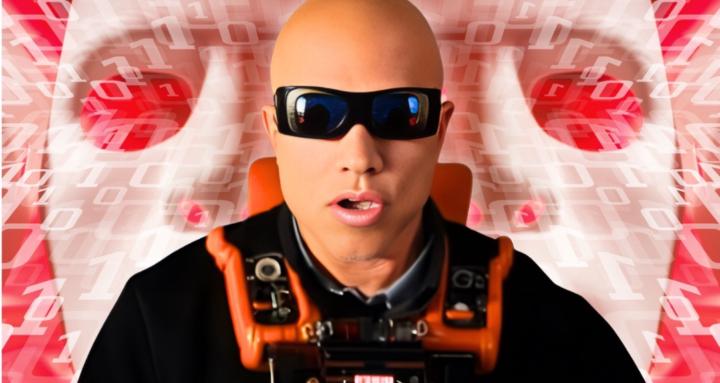
Elmer Locker Jr – This World is a Simulation: Exploring the Boundaries of Reality
The question of whether reality is truly real has fascinated philosophers, scientists, spiritual teachers, and curious minds for centuries. Among the many modern discussions surrounding this topic, Elmer Locker Jr – This World is a Simulation presents a compelling perspective that challenges conventional thinking about existence, consciousness, and the universe itself.
The simulation theory has grown from a niche philosophical idea into a mainstream topic discussed by academics, technology experts, and influential thinkers. At its core lies a fascinating possibility: what if the world we experience every day is not the ultimate reality but rather a sophisticated simulation designed by an advanced intelligence?
This concept forces us to reconsider everything we know about life, free will, consciousness, and the very fabric of existence.
Understanding the Simulation Hypothesis
The simulation hypothesis suggests that our universe may be an artificial construct created by a highly advanced civilization. Similar to how humans create virtual worlds through computer games and simulations, a future civilization with unimaginable computational power could theoretically generate entire universes populated with conscious beings.
In this framework, every object, event, and experience could be part of an immense digital reality operating under predefined rules and algorithms.
While the idea may initially sound like science fiction, it has gained credibility through philosophical arguments and advances in technology. As virtual reality, artificial intelligence, and computational modeling continue to evolve, the possibility of creating increasingly realistic simulated environments becomes more plausible.
The discussion presented in Elmer Locker Jr – This World is a Simulation encourages readers to examine these possibilities with an open mind rather than dismissing them outright.
The Origins of Simulation Theory
Although the simulation concept is often associated with modern technology, similar ideas have existed throughout history.
Ancient philosophers questioned the reliability of human perception. Spiritual traditions across different cultures suggested that physical reality may be an illusion masking a deeper truth. In modern philosophy, thinkers explored whether humans can ever truly know the nature of reality beyond their sensory experiences.
The simulation hypothesis emerged as a contemporary interpretation of these timeless questions. Instead of viewing reality as a mystical illusion, it proposes a technologically generated environment governed by computational processes.
This shift from metaphysical speculation to technological possibility has reignited interest in the fundamental nature of existence.
Reality as Information
One of the most intriguing aspects of simulation theory is the notion that reality may fundamentally consist of information.
Modern physics increasingly reveals that the universe behaves in ways that resemble computational systems. Mathematical structures appear deeply embedded in nature, from atomic interactions to galactic formations. The laws of physics operate with remarkable consistency, much like programmed rules within a software environment.
Some researchers have suggested that information could be more fundamental than matter itself. If reality is ultimately informational, then a simulated universe becomes a concept worthy of serious consideration.
This perspective aligns closely with the themes explored in Elmer Locker Jr – This World is a Simulation, where reality is examined through the lens of data, perception, and consciousness.
Consciousness and the Observer
A critical challenge for simulation theory involves consciousness.
Even if a universe can be simulated, can conscious beings exist within it?
Consciousness remains one of the greatest mysteries in science. Despite tremendous advances in neuroscience, researchers still cannot fully explain how subjective experiences arise from physical processes.
Simulation theory introduces fascinating possibilities regarding awareness. If consciousness emerges from sufficiently complex systems, then simulated beings could potentially possess genuine experiences and self-awareness.
This leads to profound philosophical questions:
- Are our thoughts truly our own?
- Do we possess free will?
- Can consciousness exist independently of physical matter?
- Is self-awareness evidence of a deeper reality beyond the simulation?
These questions continue to fuel debates among philosophers, scientists, and theorists worldwide.
Evidence Often Cited by Simulation Supporters
While no definitive proof exists, proponents of simulation theory often point to several observations that they believe are consistent with a simulated reality.
1. Mathematical Precision of the Universe
The universe follows highly precise mathematical laws. From gravity to quantum mechanics, reality appears structured according to elegant mathematical principles.
Supporters argue that this resembles the rule-based architecture found within computer-generated environments.
2. Quantum Behavior
Quantum physics reveals strange phenomena that challenge intuitive understandings of reality.
Particles can exist in multiple states simultaneously, and observations appear to influence outcomes. Some theorists suggest that these behaviors resemble optimization techniques used in computational systems.
3. Universal Speed Limits
The existence of fixed limits, such as the speed of light, has been compared to processing constraints within computational environments.
Just as a computer system has performance boundaries, the universe appears to operate within strict limitations.
4. Digital Characteristics of Space and Time
Certain theories propose that space and time may not be infinitely divisible. If true, reality could possess a discrete structure similar to digital information.
While these observations do not prove the simulation hypothesis, they continue to inspire discussion and investigation.
Skepticism and Scientific Challenges
Despite its popularity, simulation theory faces significant criticism.
Many scientists argue that the hypothesis currently lacks empirical evidence. For a theory to be scientifically validated, it must generate testable predictions that can be confirmed through observation and experimentation.
Critics also point out that invoking a simulation merely shifts the question rather than answering it. If our universe is simulated, what created the reality containing the simulators?
This infinite regress presents a philosophical challenge that remains unresolved.
Additionally, some researchers contend that apparent similarities between computational systems and physical reality do not necessarily imply that the universe is literally a simulation.
Scientific skepticism remains essential in evaluating extraordinary claims.
The Role of Technology
Advancements in technology have significantly contributed to growing interest in simulation theory.
Modern video games feature expansive virtual worlds populated by intelligent characters and dynamic environments. Artificial intelligence continues to demonstrate increasingly sophisticated behavior, while virtual and augmented reality technologies blur the distinction between physical and digital experiences.
As computational capabilities improve, the prospect of creating realistic simulations becomes increasingly plausible.
If humanity eventually develops the ability to generate conscious digital beings, it raises an important question:
Could we ourselves already exist within a simulation created by a more advanced civilization?
The technological trajectory of human civilization provides much of the conceptual foundation behind this possibility.
Philosophical Implications
If reality is a simulation, the implications would be profound.
Meaning and Purpose
Would life lose meaning if existence were simulated?
Many philosophers argue that meaning arises from experience rather than the underlying nature of reality. Love, creativity, relationships, and personal growth would remain significant regardless of whether the universe is physical or simulated.
Morality
Simulation theory also raises ethical concerns.
If conscious beings can exist within simulations, creators may bear moral responsibilities toward their creations. This idea has implications for future artificial intelligence and virtual worlds developed by humanity.
Free Will
The existence of predetermined rules within a simulation prompts questions about autonomy.
Do individuals possess genuine freedom, or are choices constrained by underlying programming?
This debate mirrors longstanding discussions about determinism and human agency.
Connections to Spiritual Traditions
Interestingly, simulation theory shares certain themes with ancient spiritual teachings.
Many traditions describe the material world as temporary, illusory, or secondary to a deeper reality. Concepts such as enlightenment, awakening, and transcendence often involve recognizing that ordinary perception does not reveal the full truth.
Although simulation theory approaches these ideas through technology rather than spirituality, both perspectives encourage individuals to question assumptions about reality.
This overlap has contributed to the theory’s widespread appeal across diverse audiences.
Why the Idea Continues to Fascinate People
The enduring popularity of simulation theory stems from its ability to challenge deeply held beliefs.
Humans naturally seek answers to fundamental questions:
- Why does the universe exist?
- What is consciousness?
- Are we alone?
- What lies beyond observable reality?
The simulation hypothesis offers a framework for exploring these mysteries without claiming definitive answers.
Rather than providing certainty, it invites curiosity and critical thinking.
For many readers, Elmer Locker Jr – This World is a Simulation serves as an entry point into these larger philosophical discussions, encouraging exploration of ideas that stretch the boundaries of conventional understanding.
Could We Ever Know the Truth?
One of the most fascinating aspects of simulation theory is the possibility that definitive proof may remain forever beyond reach.
If a simulation is sufficiently advanced, its inhabitants may lack the tools necessary to detect its underlying structure. Any evidence could potentially be part of the simulation itself.
This creates a unique epistemological challenge. How can beings within a system objectively analyze the system’s ultimate nature?
Despite these difficulties, researchers continue investigating the foundations of reality through physics, mathematics, neuroscience, and philosophy.
Each discovery brings humanity closer to understanding the universe, even if the final answer remains elusive.
Final Thoughts
Elmer Locker Jr – This World is a Simulation explores one of the most captivating ideas of the modern era. Whether viewed as philosophy, science, speculation, or a combination of all three, the simulation hypothesis encourages deeper reflection on reality, consciousness, and existence itself.
While no conclusive evidence currently proves that we live within a simulation, the theory remains a powerful intellectual framework for examining the mysteries of the universe. Its blend of technology, philosophy, and science continues to inspire debate among scholars and curious thinkers alike.
Ultimately, the value of exploring simulation theory lies not merely in determining whether the hypothesis is correct but in expanding our understanding of what reality might truly be. By questioning assumptions and embracing curiosity, we continue humanity’s timeless pursuit of knowledge and truth.
Reviews
There are no reviews yet.